Squeaky Hardwood Floors in Mississauga: What the Repair Really Costs
Fixing a squeaky hardwood floor in Mississauga usually costs about $150 to $400 for a few squeaky spots, plus about $50 for each extra spot. A visit covering up to six squeaky spots runs about $400, tax included, and small hardwood spot repairs start around $150.
A squeaky hardwood floor is usually a sign that something in the floor assembly is moving when you walk across it.
That movement can happen between hardwood boards and the subfloor, between the subfloor and joists, around fasteners, or in another part of the floor assembly. Sometimes the cause is minor and localized. Other times, widespread squeaking, soft spots, or a history of water damage can justify a closer inspection of the subfloor and framing.
One important distinction is often missed: refinishing and squeak repair are different jobs.
Refinishing improves the visible surface of the hardwood. It does not normally correct movement underneath the flooring. If the floor is noisy because components are moving against each other, the source of that movement needs to be identified first.
How Much Does It Cost to Fix a Squeaky Hardwood Floor in Mississauga?
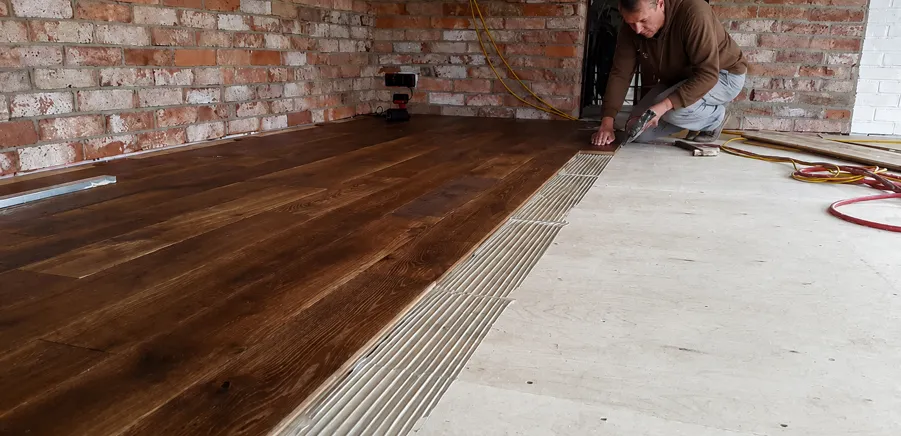
A localized squeak repair runs roughly $150 to $400, depending on the cause and the amount of work involved. We list $400, tax included, for an in-home visit covering up to six squeaky spots or stair steps, then $50 for each additional spot. Small spot repairs start at $150, and multi-room board work runs $1,500 and up.
Per-spot pricing is only a starting point. A contractor may spend more time accessing and diagnosing one difficult squeak than several easy ones in an accessible area.
The final cost can depend on:
- How many areas are squeaking
- Whether the problem is localized or widespread
- Whether the floor can be accessed from below
- The type and construction of the hardwood
- The condition of the subfloor
- Whether boards need to be removed and replaced
- Whether cosmetic repairs or refinishing are also required
- Whether there is evidence of moisture or previous water damage
For that reason, a written quote based on an inspection is more useful than a per-squeak price.
Typical GTA Prices
| Work | Typical price |
|---|---|
| Squeak diagnostic visit | $40 |
| Squeak repair visit, up to 6 spots or stair steps | $400, tax included |
| Each additional squeaky spot or stair step | $50 |
| Small hardwood spot repair | From $150 |
| Hardwood board replacement | $100 to $300 per area; $300 to $600 for a single board with stain matching |
| Full hardwood refinishing | About $3.50 to $8 per sq. ft. |
| 300 sq. ft. full refinishing | About $1,050 to $2,400 |
Actual pricing can fall outside these ranges depending on access, materials, preparation, damage, and project size.
Subfloor repair has no typical price because the scope can range from additional fastening or localized repairs to removal and replacement of damaged material.
What Actually Causes a Hardwood Floor to Squeak?
A squeak generally means that two components of the floor assembly are moving relative to each other and producing friction or another audible movement.
Depending on how the floor was constructed, the movement may occur between:
- Hardwood and subfloor
- Subfloor and joists
- Boards and fasteners
- Flooring and adhesive
- Flooring and underlayment
- Other components of the floor assembly
The sound itself does not tell you exactly which interface is moving.
Seasonal Changes Can Make Squeaks More Noticeable
Hardwood responds to changes in moisture conditions.
During the heating season, indoor relative humidity can fall, and wood can lose moisture and change dimension. That movement can make an existing gap, loose connection, or friction point more noticeable.
A floor that squeaks more in winter does not automatically have a serious structural problem.
The more useful question is whether the floor is simply making noise or whether there is excessive movement, softness, sagging, or other evidence of a problem.
How Do You Find the Source of a Squeak?
The location of the sound is a clue, not a diagnosis.
A useful inspection starts by reproducing the noise and observing how the floor moves.
Some common patterns include:
- One or two boards: The issue may be localized to the board, fastener, or connection beneath it.
- Several adjacent boards: Movement may involve the flooring and subfloor or a larger section of the assembly.
- A large portion of the room: The subfloor, framing, fastening, or floor deflection may need closer examination.
- A soft or bouncy area: This deserves more attention than an isolated noise because it can indicate damaged material, moisture problems, inadequate support, or excessive deflection.
These patterns are useful for deciding where to investigate. They should not be treated as a diagnosis without inspecting the floor.
Can Refinishing Fix a Squeaky Hardwood Floor?
Usually, no.
Refinishing addresses the visible hardwood surface. The work typically involves preparing the existing finish, sanding where appropriate, staining if required, and applying a new finish.
A squeak, however, is usually related to movement within the floor assembly.
If the floor is worn and squeaky, the normal sequence is to:
- Identify the source of the movement.
- Repair the underlying issue where possible.
- Replace damaged boards if necessary.
- Refinish the floor if the surface also needs restoration.
There can be exceptions depending on the floor’s construction and the actual cause of the noise, which is why the cause should be established before deciding on refinishing.
Can a Squeaky Hardwood Floor Be Repaired Without Removing the Hardwood?
Often, yes.
The appropriate method depends on where the movement is occurring and whether the floor can be accessed from above, below, or both.
Repairs From Above
Some localized repairs can be carried out from the finished floor using specialized flooring fasteners or other repair techniques.
The objective is to secure the moving material while minimizing the visible evidence of the repair. Depending on the flooring and finish, small filled or repaired areas may still be visible under certain lighting conditions.
A contractor should choose the method based on the construction of the floor rather than applying the same repair to every squeak.
Repairs From Below
If the floor is accessible from an unfinished basement, crawlspace, or another area below, the repair can sometimes be performed without disturbing the finished hardwood.
Depending on the cause, work from below may involve:
- Securing a loose subfloor
- Addressing gaps or movement
- Adding appropriate fastening
- Using suitable shimming or adhesive techniques
- Repairing damaged material where accessible
The correct method depends on the floor assembly. Blindly adding screws or adhesive without identifying what is moving can create a new problem without fixing the original one.
When Boards Need to Be Removed
Board removal may be necessary when:
- A board is damaged
- The subfloor underneath needs to be exposed
- Water damage has affected the material
- The repair cannot be completed reliably without access
- Several boards need replacement
Removing hardwood is more invasive and can also make colour and finish matching more difficult.
What If the Whole Floor Squeaks?
Widespread squeaking does not automatically mean the house has a structural problem.
It can result from movement involving a larger portion of the floor assembly, including the subfloor, joists, fastening, or floor deflection.
However, widespread noise deserves a broader inspection than one isolated squeak, particularly when it is accompanied by:
- Soft or spongy areas
- Noticeable bouncing
- Uneven or sagging sections
- Recurring squeaks after previous repairs
- Water stains
- A history of leaks or flooding
- Damaged or deteriorated subfloor material
The goal is to determine whether the problem is simply noise-producing movement or evidence of a larger floor condition that needs repair.
What Does Subfloor Repair Have to Do With a Squeaky Floor?
The subfloor sits beneath the finished flooring and forms an important part of the floor assembly.
If the subfloor is moving against the framing, or if the subfloor itself is damaged, repairing only the visible hardwood may not solve the problem.
Warning signs that justify inspecting the subfloor include:
- Soft or spongy flooring
- Significant flexing
- Sagging
- Widespread squeaking
- Squeaks that return after previous repairs
- Water stains
- Previous plumbing or roof leaks
- Known water damage
The repair could be relatively limited, such as addressing fastening or localized movement. In other cases, damaged sections may need to be removed and replaced.
If moisture caused the damage, the source of the moisture should be addressed before installing replacement flooring.
How Much Does Hardwood Refinishing Cost in Mississauga?
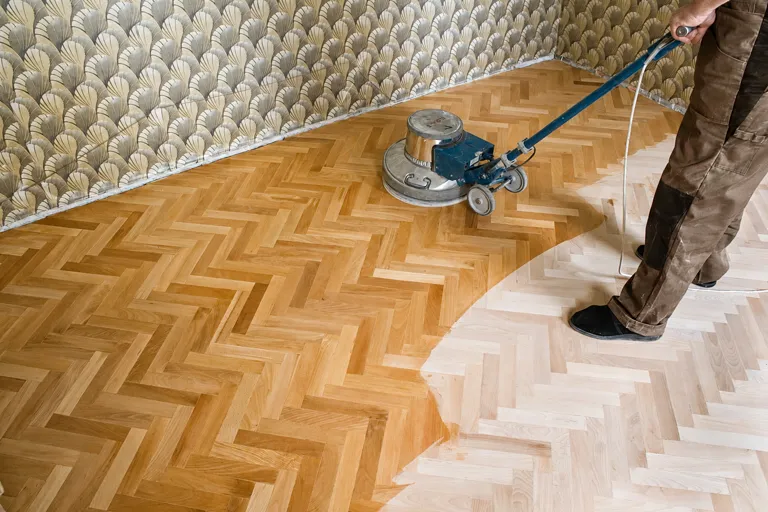
Full hardwood refinishing runs about $3.50 to $8 per square foot. A clear finish usually lands around $3.50 to $6, and adding stain takes it up to about $8.
For a 300-square-foot area, that works out to roughly:
$1,050 to $2,400
The final price can depend on:
- Condition of the existing finish
- Number and size of rooms
- Layout and accessibility
- Furniture and preparation requirements
- Staining
- Board repairs
- Water damage
- Type of finish system
- Amount of preparation required
Not every worn hardwood floor needs complete sanding.
If the existing finish is generally sound and the problem is primarily surface wear, a contractor may recommend a less aggressive maintenance or recoating approach instead of full refinishing. A screen-and-recoat on a room with intact boards runs about $1.50 to $3 per square foot. The appropriate treatment depends on the condition of the existing finish.
How Much Does It Cost to Replace a Hardwood Board?
Prices run from $100 to $300 per repair area for hardwood plank replacement up to $300 to $600 for a single board with stain matching, depending on the species and access.
Replacing one board is not simply a matter of buying a replacement piece of wood.
The contractor may need to:
- Identify the wood species and dimensions.
- Remove the damaged board without damaging surrounding flooring.
- Prepare the opening.
- Install the replacement.
- Match the surrounding appearance as closely as practical.
- Blend the repair into the existing finish where required.
Matching can be particularly difficult with older floors because the original wood may have changed colour over time.
If multiple boards require replacement, pricing may be based on the affected section rather than a simple per-board calculation.
Does the Type of Hardwood Matter?
Yes.
Solid Hardwood
Solid hardwood can often be repaired, refinished, or selectively replaced depending on its condition and thickness.
Engineered Hardwood
Engineered flooring has a layered construction, so repair and refinishing options depend on the product’s wear layer and installation method.
Floating Flooring
Floating floors require different troubleshooting.
A floating floor is not normally fastened to the subfloor in the same way as a traditionally nailed or stapled hardwood floor. Adding fasteners without understanding the installation can interfere with the floor’s ability to move as designed.
The inspection should consider:
- Substrate condition
- Underlayment
- Expansion space
- Transitions
- Installation method
- Whether the noise is actually coming from the flooring or from the substrate below
Will a Humidifier Stop Hardwood Floor Squeaks?
Not necessarily.
Maintaining a reasonably stable indoor humidity level can reduce some seasonal movement in wood, but a humidifier cannot repair:
- Loose fasteners
- Damaged subfloor
- Excessive floor movement
- Poor support
- Water-damaged material
- Other physical problems within the floor assembly
If a floor squeaks mainly during the heating season, that seasonal pattern is useful information for the contractor.
Instead of guessing that the air is “too dry,” measure indoor relative humidity and consider the timing of the noise.
Should You Repair the Squeak or Refinish the Floor?
It depends on what condition the floor is in.
| Floor condition | More appropriate starting point |
|---|---|
| Good finish with one or two squeaks | Investigate localized squeak repair |
| Worn finish but floor is otherwise solid | Consider refinishing |
| Worn and squeaky | Address movement first, then refinish |
| Widespread squeaking with soft areas | Inspect the underlying floor assembly |
| Squeaking with water damage | Identify and address the moisture/damage first |
The objective is to correct the cause rather than temporarily hide the symptom.
What Should a Contractor Check During an Inspection?
A useful inspection should establish:
1. Where the noise occurs
The contractor should reproduce the squeak and identify its location rather than relying only on the homeowner’s description.
2. What is actually moving
The visible hardwood may not be the source of the movement. The subfloor, fasteners, framing, or another part of the assembly may be involved.
3. Whether the problem is localized or widespread
One isolated area calls for a different investigation than a room that moves and squeaks across most of its surface.
4. Whether there is access from below
Basements and crawlspaces can sometimes provide access that allows repairs without disturbing the finished hardwood.
5. Whether there are signs of moisture or damage
Soft areas, stains, previous leaks, or damaged material can change the scope of the repair.
6. Whether refinishing is actually necessary
If the floor is structurally sound and the finish is in acceptable condition, refinishing may not be necessary simply because there is a squeak.
Squeaky Hardwood Floor FAQ
How much does it cost to fix a squeaky hardwood floor in Mississauga?
Usually about $150 to $400 for a few squeaky spots, plus about $50 for each extra spot. The actual cost depends on the cause, access, flooring type, and extent of the repair.
Can refinishing stop a squeaky floor?
Usually not. Refinishing addresses the surface. A squeak caused by movement underneath the flooring generally requires a repair to the source of that movement.
Why does my hardwood floor squeak more in winter?
Changes in indoor humidity can cause wood to change dimension. That seasonal movement can make an existing friction point or loose connection more noticeable.
Should I buy a humidifier?
Not specifically to repair a squeak. Stable indoor humidity may reduce some seasonal wood movement, but it cannot correct a loose connection, damaged subfloor, or other physical floor problem.
Does the hardwood have to be removed?
Not necessarily. Some repairs can be completed from above, while others can be performed from below when access is available. Removal becomes more likely when damaged boards or subfloor material need to be exposed or replaced.
Can engineered hardwood be repaired?
Often, yes, but the appropriate method depends on its construction, wear layer, installation method, and the cause of the problem.
Does a squeaky floor mean there is a structural problem?
Not automatically. Many squeaks are caused by relatively localized movement. However, widespread squeaking combined with softness, sagging, excessive movement, or water damage deserves further inspection.
Should I repair the squeak before refinishing?
If the noise is caused by movement within the floor assembly, it generally makes sense to address that movement before spending money on refinishing.
How long does a squeak repair take?
A simple localized repair can be relatively quick, while repairs involving difficult access, damaged boards, or the subfloor can take substantially longer. The scope should be established after the source is identified.
Will the repair be visible?
Some above-floor repair methods can leave small filled or repaired areas. How noticeable they are depends on the flooring, finish, repair method, lighting, and age of the surrounding wood.
How do I get an accurate price?
Have the floor inspected and ask for a written quote that explains the suspected cause, proposed repair, materials, and whether any board replacement or refinishing is included.
Bottom Line
If your Mississauga hardwood floor looks good and has one or two isolated squeaks, the problem may be suitable for a localized repair.
If the floor squeaks throughout a room, feels soft or bouncy, shows signs of water damage, or keeps developing the same problem after repairs, the underlying floor assembly should be inspected.
If the floor is both worn and noisy, address the movement first and refinish afterward if the surface needs restoration.
The most useful question is not simply:
“How much does it cost to stop the squeak?”
It is:
“What is actually moving, and what needs to be repaired to stop it?”
That distinction is what separates a temporary noise reduction from a repair that addresses the underlying problem.