Flooring for Mississauga Rental Properties: What Landlords Should Choose
Choosing flooring for a rental property is mostly about finding the right balance between durability, maintenance, appearance and cost.
A floor in a rental has to deal with more than normal household use. Tenants move furniture. Pets scratch surfaces. Shoes bring in dirt and water. Spills happen. Between tenants, the floor may need to be cleaned or repaired quickly before the next occupant moves in.
That does not mean landlords should automatically install the hardest or most expensive flooring available.
A basement apartment, a family rental, and a higher-end condo in Mississauga can have very different flooring needs. In many properties, luxury vinyl plank (LVP) is a practical choice for living areas because it is easy to clean and comes in products designed for demanding residential use. But carpet, laminate, tile and engineered hardwood all have situations where they make more sense.
The best choice usually comes down to the room, the condition of the existing floor and how the property is going to be used. That is the first thing we look at when a landlord books flooring installation in Mississauga with us.
Key Takeaways
- LVP is a practical choice for many rental living areas and is particularly convenient when easy cleaning is a priority.
- Carpet can still work well in bedrooms, especially when comfort and noise reduction are important.
- Laminate is worth considering in dry areas, but moisture limitations should be checked before installation.
- Tile is a good option for bathrooms and other areas where water is a regular concern.
- Engineered hardwood can suit higher-end rentals where appearance is an important part of the property.
- Basement flooring needs to be chosen after checking the concrete or subfloor for moisture and other problems.
- Installation and preparation costs can matter just as much as the price of the flooring itself.
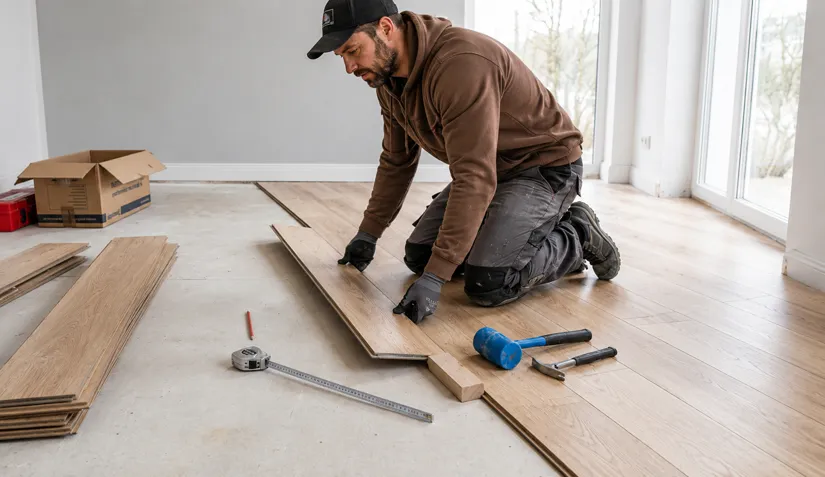
Start With the Rental, Not the Flooring
There is no flooring material that wins in every rental property.
Before choosing a product, think about the way the unit will actually be used.
A rental with pets will put different demands on a floor than a unit occupied by one person. A basement has different moisture concerns from a second-floor condo. A property that is turned over every year needs a different maintenance strategy from one where tenants tend to stay for several years.
There are a few questions worth answering first.
How often will the unit turn over?
If a property changes tenants regularly, cleaning and repairs become important.
A landlord may not have much time between one tenant leaving and another moving in. Flooring that can be cleaned quickly and repaired without a major renovation can make the turnover easier.
This is one reason hard-surface flooring is popular in rental properties. It is generally straightforward to sweep, vacuum and mop, and localized damage may be easier to deal with than a badly stained carpet.
Are pets allowed?
Pet-friendly rentals need flooring that can cope with more than ordinary foot traffic.
Look at scratch resistance, cleaning requirements and how the material handles moisture. Also consider what happens if one area becomes badly damaged. Being able to replace a section rather than an entire room can be useful.
Where is the flooring going?
The same flooring does not have to be used throughout the property.
For example, LVP may be a good choice for a living room and kitchen, while carpet could be more comfortable in the bedrooms. Tile may be better suited to a bathroom.
Trying to use one material everywhere can make the renovation simpler, but it does not always produce the best result.
What is underneath the existing floor?
This is easy to overlook.
A new floor can only perform as well as the surface underneath it. Uneven subfloors, damaged plywood, cracks in concrete and moisture problems can all create trouble later.
If the existing floor is in poor condition, replacing the visible flooring without dealing with the underlying problem may simply move the problem somewhere else.
How much maintenance is acceptable?
A rental floor should be practical for the landlord as well as attractive to the tenant.
Some materials require more cleaning or occasional refinishing. Others are easier to maintain but may not provide the same appearance or comfort.
The right answer depends on what you are trying to achieve with the property.
Best Flooring Options for Different Rental Situations
| Rental situation | Flooring worth considering | Main reason |
|---|---|---|
| Living room and main areas | LVP | Easy cleaning and practical everyday use |
| Bedrooms | Carpet or LVP | Carpet adds comfort; LVP is easier to clean |
| Bathroom | Tile or suitable resilient flooring | Good choice for areas exposed to moisture |
| Kitchen | LVP, tile or other suitable resilient flooring | Easy routine cleaning |
| Basement | Moisture-appropriate LVP or tile | Moisture and substrate conditions are important |
| Dry, above-grade rooms | LVP or laminate | Both can work in suitable conditions |
| Higher-end rental | Engineered hardwood or premium LVP | Better fit where appearance matters |
| Pet-friendly rental | LVP or tile | Easier to clean than carpet after spills and accidents |
These are general recommendations. The actual product and condition of the property still need to be considered.
LVP: A Practical Choice for Many Rental Living Areas
LVP has become a common flooring choice for rental properties, and there is a good reason for that.
It gives landlords a hard surface that is relatively easy to clean while offering the appearance of wood. There are also many different products available, ranging from basic residential options to more robust products intended for heavier use.
But not all vinyl plank flooring is the same.
Thickness, wear layer, construction, locking system, warranty and installation requirements can vary significantly between products. A landlord managing several rental units may want a different specification than someone renovating one apartment.
Why LVP works well in rentals
Routine cleaning is simple, and the surface does not have the same staining concerns as carpet.
Some LVP products also make localized repairs relatively straightforward. If a plank is badly damaged and the product can be disassembled or repaired as specified by the manufacturer, the landlord may not need to replace the entire room.
That can be particularly useful after a tenant moves out.
The installation itself still needs proper preparation. An uneven or damaged substrate can affect the finished floor, regardless of how good the flooring product is.
In some cases, floor removal in Mississauga may be necessary before installing the new floor.
What should a landlord look for?
Instead of choosing the cheapest LVP available, ask about:
- Wear layer
- Plank thickness
- Product warranty
- Approved installation method
- Residential or commercial rating
- Moisture requirements
- Subfloor preparation
- Availability of replacement planks
It is also worth keeping a few spare planks after installation. Flooring can be discontinued, and finding an exact match several years later may be difficult.
For landlords replacing existing flooring, a vinyl plank flooring installation service in Mississauga can include assessing the existing floor before the installation begins.
Carpet Still Makes Sense in Some Rental Bedrooms
Carpet gets a bad reputation in rental properties because it can be harder to keep clean than hard flooring.
That criticism is fair, but it does not mean carpet should never be used.
Bedrooms are one of the better places for it.
Carpet feels warmer underfoot and can help reduce noise between rooms and floors. For some tenants, that comfort is worth more than having the same hard flooring throughout the property.
The main concern is what happens when the carpet takes a beating.
Pets, spills, smoking and heavy foot traffic can leave stains and odours. Carpet can also stretch over time, particularly when it has not been installed correctly or has been subjected to repeated movement.
If existing carpet is otherwise in good condition but has developed wrinkles or loose areas, carpet stretching in Mississauga may be enough to restore it.
For a new rental installation, a landlord should think about the fibre, pile, colour and expected use rather than simply choosing whatever carpet has the lowest price.
Dark or patterned carpet can also be more forgiving of everyday marks than a very light colour.
Laminate Flooring: Good in the Right Location
Laminate remains a useful option for rental properties, particularly when a landlord wants the appearance of wood without choosing real hardwood.
It can work well in bedrooms, living rooms and other dry areas when the product is suitable for the application.
The biggest issue is moisture.
Traditional laminate has a wood-based core, so water getting into joints or edges can cause problems. Newer products have improved moisture resistance, but landlords should still read the manufacturer’s instructions rather than assuming a product described as water resistant can be installed anywhere.
A bathroom, laundry area or basement may require a different flooring solution.
For a dry second-floor room, however, laminate can be a perfectly reasonable choice.
The important thing is to know the limitations of the particular product before it is installed.
Tile Is Hard-Wearing, But It Has Its Trade-Offs
Tile is one of the obvious choices for areas where water is a concern.
Bathrooms are the clearest example, but tile can also work well in entrances, laundry areas and some kitchens.
It is durable and relatively easy to clean. A properly installed tile floor can also last for many years.
There are downsides.
Tile is harder underfoot than LVP or carpet. It can feel cold over an unheated concrete floor, and cracked tiles or damaged grout can require repairs. Matching an older tile years after installation can also be surprisingly difficult.
Installation tends to involve more preparation and labour than some floating flooring systems.
For those reasons, tile is usually best used where its particular advantages are valuable rather than automatically installing it throughout the rental.
A tile flooring installation service in Mississauga can be useful when a landlord wants tile in specific areas rather than the entire unit.
Engineered Hardwood for Higher-End Rentals
Some rental properties need to make a stronger visual impression.
A higher-end condo or executive rental, for example, may benefit from real wood flooring because prospective tenants notice the finish and overall quality of the interior.
Engineered hardwood can be a good option in that situation.
It has a real wood surface but uses a different construction from solid hardwood. The specific product still needs to be suitable for the installation environment.
The downside is simple: real wood can get damaged.
Furniture can scratch it. Pets can leave marks. Heavy objects can dent boards. Depending on the damage and the product, repairs or refinishing may be necessary.
That does not make hardwood a bad rental flooring choice. It just means the landlord is making a different trade-off.
If appearance is important enough to justify the additional investment, hardwood can make sense.
For existing floors, hardwood floor repair in Mississauga can address certain types of localized damage. A worn surface may also be a candidate for hardwood floor refinishing in Mississauga.
Basement Rentals Need More Attention
Basements are where flooring decisions can go wrong quickly.
The first thing to look at is not the colour or style of the new floor. It is the condition of the concrete or subfloor.
Moisture can enter a basement through several routes, and flooring should not be used to cover up an unresolved water problem.
LVP is often considered for basement applications because many products are suitable for below-grade installations and are easier to maintain than carpet. But the word “vinyl” alone is not enough. The specific product needs to be approved for the intended application.
The concrete should also be checked for problems such as significant cracking, unevenness or excessive moisture.
If preparation is required, subfloor repair in Mississauga may need to happen before the new flooring goes down.
Landlords should also think about comfort. Concrete basement floors can feel cold, particularly in winter. Depending on the property and flooring system, heated floor installation in Mississauga may be an option.
The important point is to deal with the basement conditions first and choose the flooring second.
Condo Rentals Have Another Set of Rules
A condo landlord has to think about more than the flooring itself.
The condominium corporation may have requirements concerning noise transmission, underlayment, renovation hours, contractor access and approval procedures.
This matters particularly when replacing carpet with a hard floor.
The visible flooring is only one part of the installation. The underlayment and complete flooring assembly can affect sound transmission to the unit below.
Before ordering materials, check the condo corporation’s rules and any requirements in the building’s governing documents.
A good flooring installation can still create a problem if it does not meet the building’s requirements.
Don’t Compare Flooring by Square-Foot Price Alone
The lowest material price is not necessarily the lowest-cost flooring for a rental.
Consider what happens over several years.
A floor may cost less to install but require more repairs. Another may cost more upfront but survive several tenant turnovers with relatively little work.
There is also the cost of getting a unit ready between tenants.
If a damaged floor takes several days to remove and replace, the labour is only part of the issue. The landlord may also be dealing with an empty unit that cannot be rented until the work is finished.
A more useful calculation is:
Flooring + preparation + installation + maintenance + repairs + replacement + turnover time
The numbers will be different for every property.
A small basement rental with pets should not necessarily receive the same flooring specification as an expensive condo with long-term tenants.
Questions to Ask Before Hiring a Flooring Contractor
Before approving the work, a landlord should ask a few practical questions:
- Can the existing flooring stay, or does it need to be removed?
- Is the subfloor or concrete in good enough condition?
- Is levelling or repair required?
- Does the substrate need moisture testing?
- Is the flooring product suitable for this particular room?
- What installation method does the manufacturer require?
- Can damaged sections be replaced later?
- Is the product likely to remain available if repairs are needed?
- Does the estimate include demolition and disposal?
- Will baseboards, transitions or trim need to be replaced?
- How long should the work take under the current site conditions?
- What maintenance should the tenant follow after installation?
A contractor who looks at the existing floor before giving a firm recommendation can usually give a more useful answer than someone quoting a flooring type from a phone call.
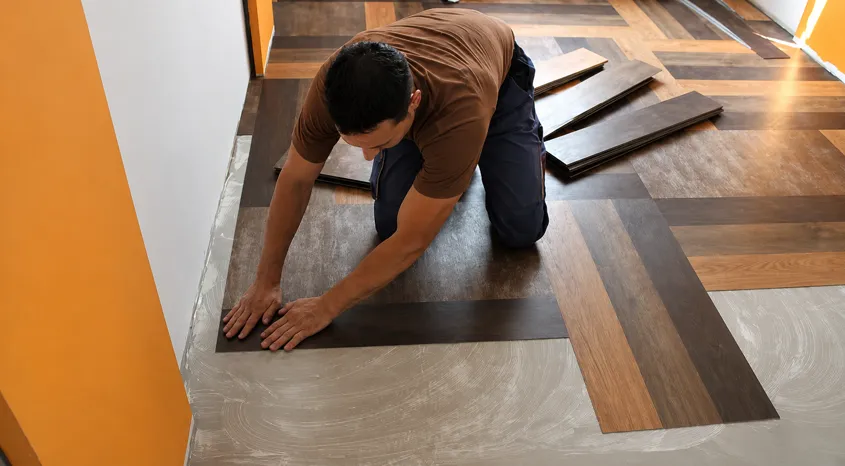
How the Main Flooring Options Compare
| Factor | LVP | Carpet | Laminate | Tile | Engineered Hardwood |
|---|---|---|---|---|---|
| Routine cleaning | Easy | More involved | Easy | Moderate | Moderate |
| Moisture resistance | Depends on product | Low | Depends on product | High | Depends on product |
| Comfort | Moderate | High | Moderate | Low | Moderate |
| Pet-friendly use | Generally good | More maintenance | Reasonable with limitations | Good | More vulnerable to visible scratches |
| Localized repairs | Often practical | Possible | Possible | Possible | Possible |
| Good applications | Living areas, kitchens, suitable basements | Bedrooms | Dry rooms | Bathrooms and wet areas | Higher-end rentals |
| Main concern | Product and substrate selection | Stains and odours | Moisture | Hardness and installation cost | Cost and surface damage |
This is a general comparison. The actual product specifications should always be checked before installation.
Frequently Asked Questions
What is the best flooring for a Mississauga rental property?
For many standard rentals, LVP is a practical option for living areas because it is easy to clean and available in products designed for regular residential traffic.
That does not mean every room should have LVP. Carpet can work well in bedrooms, tile is useful in wet areas and engineered hardwood may be appropriate for a higher-end rental.
Is LVP good for a basement rental?
It can be, provided the particular product is approved for below-grade installation and the concrete or subfloor meets the manufacturer’s requirements.
If there is an existing moisture problem, that should be addressed before installing new flooring.
Is carpet a bad choice for rental properties?
No.
Carpet can be a good bedroom flooring choice when comfort and sound absorption are priorities. The trade-off is that it generally takes more work to clean and repair after heavy staining or odour problems.
Is laminate suitable for a rental?
Yes, when used in the right location.
Laminate can work well in dry, above-grade rooms. Check the product’s moisture requirements and warranty before using it in kitchens, bathrooms, laundry areas or basements.
What flooring is best for a rental property with pets?
LVP and tile are often practical choices because routine cleaning is relatively simple.
The particular flooring product still matters. Look at scratch resistance, cleaning instructions and the availability of replacement material.
Should I replace the subfloor before installing new flooring?
Not necessarily.
The existing substrate should be inspected first. If it is stable, sufficiently flat and otherwise suitable for the new flooring, replacement may not be necessary.
If it is damaged or outside the manufacturer’s requirements, repairs or preparation may be needed. Subfloor repair in Mississauga can address those issues before new flooring is installed.
How much does rental flooring cost in Mississauga?
There is no useful single price for a rental flooring project.
The final cost can depend on the material, size of the unit, existing flooring, demolition, subfloor preparation, installation method, transitions and other site conditions.
A written estimate based on the actual property is more useful than relying on a generic square-foot price.
For example, the carpet installation cost in Mississauga will depend on the carpet selected and the work required at the property.
Does Mississauga Carpet & Flooring work with landlords?
Yes. Mississauga Carpet & Flooring provides residential flooring services in Mississauga, including flooring replacement and installation work that can be relevant to rental properties.
The company offers free in-home measurements and written, itemized quotes. Anything that comes up after an install is looked at and worked out case by case, so landlords should confirm what is included in their particular project before proceeding.
What should I install in a rental basement?
Start by checking the moisture and substrate conditions.
Once those issues have been addressed, LVP or tile may be suitable depending on the property and the flooring product. The cheapest flooring is not necessarily the best choice if the basement conditions are likely to cause problems later.
The Bottom Line
For most landlords, the goal is not to find the toughest flooring available. It is to choose something that makes sense for the property and does not create unnecessary maintenance problems later.
LVP is a strong option for many living areas because it is easy to clean and comes in a wide range of products. Carpet still has a place in bedrooms, particularly when comfort matters. Laminate can work well in dry areas. Tile is useful where water is a concern, and engineered hardwood can be worth the extra investment in a higher-end rental.
Before choosing any of them, look at what is already there.
Check the substrate. Look for moisture problems. Consider how the unit will be used and how often it is likely to turn over. Then compare the installed cost, not just the price of the flooring itself.
A good rental floor is one that looks presentable when the tenant moves in, holds up reasonably well while they are there, and can be maintained without turning every repair into a major renovation.