Water-Damaged Hardwood Floor Repair in Mississauga: Can It Be Saved?
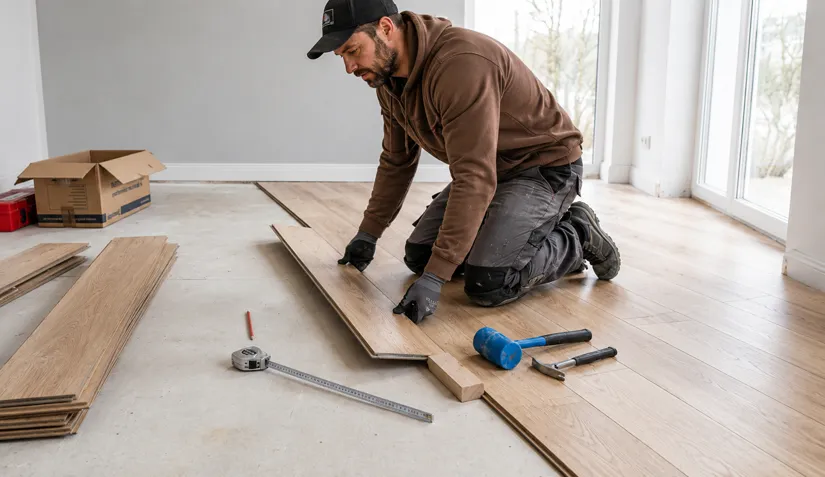
A Practical Guide for Mississauga Homeowners
A hardwood floor can look dry while moisture remains beneath the surface. After a leak or flood, water may be trapped under the boards, in the adhesive or underlay, or inside the subfloor. Those hidden conditions often determine whether the floor can be saved.
The first priority is to stop the water and begin drying. Sanding, staining, and other cosmetic repairs should wait until moisture readings show that the flooring assembly has stabilized.
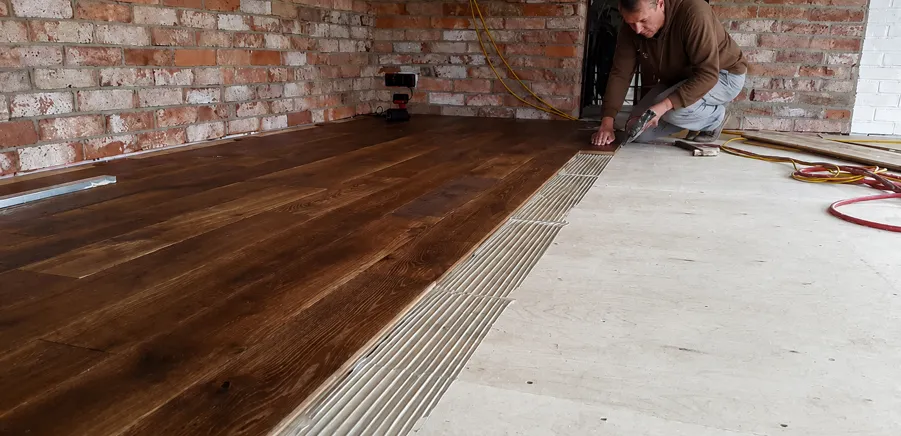
What to Do First
Once it is safe to enter the area:
- Stop the source. Shut off the relevant water supply or arrange an emergency plumbing repair.
- Check for electrical hazards. Do not enter standing water near outlets, appliances, or an energized electrical system. Contact an electrician if there is any doubt.
- Remove standing water. Extraction should begin as soon as possible.
- Document the damage. Photograph the source, affected rooms, visible damage, and anything that must be removed.
- Contact your insurer if a claim may be involved. Ask what records it requires, but do not delay reasonable emergency work needed to prevent further damage.
- Arrange professional drying when necessary. Anything beyond a minor surface spill may require assessment by a water-restoration contractor.
Health Canada recommends acting quickly after a flood and notes that buildings and furnishings are less likely to develop mould when dried within 48 hours. This is a reason to begin mitigation promptly, not a guarantee that every material can be dried within two days.
The Water Source Matters
A recently broken supply line is not handled in the same way as sewage or outdoor floodwater. The source, length of exposure, materials affected, and possibility of contamination all influence what can safely remain.
A limited clean-water leak may leave flooring that can be dried and reassessed. Flooring exposed to sewage or outdoor floodwater presents a greater health concern. Health Canada advises removing and discarding flooring soaked by floodwater and contacting the local public health authority when sewage is involved.
If the source is uncertain, keep people out of the affected area until a qualified restoration professional has assessed it. Flooring repairs should begin only after contamination and building-drying requirements have been addressed.
Why the Surface Is Not Enough
Water can travel between boards and spread beneath the floor, sometimes beyond the area that first appeared wet. A surface check by sight or touch cannot establish whether the floor is ready for repair.
A useful moisture assessment should include:
- Readings from several locations in the affected area
- Comparison readings from similar, unaffected flooring
- Measurements at appropriate depths where the equipment permits
- Assessment of the wood or concrete subfloor
- Indoor temperature and relative humidity
- Repeat readings showing whether moisture is falling, stable, or rising
- The meter type, settings, test locations, and dates
The meter must be suitable for the material and used according to its manufacturer’s instructions. Wood species, board thickness, finishes, and embedded metal can affect readings.
There is no universal moisture number that proves every floor is ready to sand. The contractor should consider the flooring product, subfloor, normal indoor conditions, manufacturer requirements, and readings from unaffected material in the same home.
What the Visible Damage May Mean
Cupping
A cupped board has raised edges and a lower centre. It often develops when the bottom of the board contains more moisture than the top.
Mild cupping may improve after the source is corrected and the floor dries. The floor should be monitored before refinishing is considered.
Crowning
A crowned board has a raised centre and lower edges. One possible cause is sanding a cupped floor before it has dried.
When the remaining moisture later leaves the board, its shape changes again. Because the raised edges have already been sanded away, the centre may be left higher.
Crowning can have other causes, so its moisture history and any previous sanding should be investigated.
Buckling
Buckling occurs when boards release from the subfloor or rise noticeably. Possible causes include severe moisture exposure, failed fasteners or adhesive, restricted expansion space, and subfloor damage.
Localized buckling may be repairable, but the affected area usually needs to be opened so the contractor can inspect underneath. Widespread movement or a damaged subfloor may require broader replacement.
Dark stains
Not every dark stain is mould. Possible causes include water, metal reacting with tannins in the wood, pet contamination, and minerals carried by the water.
After the floor is dry, testing a small area can show whether sanding will improve the mark. Deep staining or contamination may require board replacement.
Soft or weakened material
Soft boards, decayed wood, or weakened plywood should not be covered by a cosmetic repair. Damaged material must be exposed and replaced as required.
Why Sanding Must Wait
Do not sand simply because the surface feels dry or because several days have passed.
The National Wood Flooring Association advises correcting the moisture source and allowing a cupped floor to return to appropriate in-use conditions before repair. Its guidance also stresses the importance of measuring at different depths because the surface may be much drier than the lower part of a board.
Premature sanding can turn temporary distortion into permanent damage. Before sanding, the contractor should confirm that:
- The source has been corrected
- Moisture conditions are documented
- Readings are reasonably consistent with unaffected reference areas
- The board shape has stabilized
- The subfloor is suitable for the proposed work
- The floor has enough usable thickness for sanding
- Loose, split, or delaminated boards have been addressed
Once the floor is stable, the right result may be no further work, a finish repair, selected board replacement, full refinishing, or replacement of a larger area.
Solid and Engineered Hardwood Are Different
Solid hardwood boards are made from a single piece of wood. If they dry without severe deformation, decay, or joint damage, they may be suitable for repair and refinishing.
Whether a solid floor can tolerate another sanding depends on its remaining thickness, the position of the tongue-and-groove joint, and any previous refinishing. There is no reliable number of sanding cycles that applies to every floor.
Engineered hardwood has a real-wood wear layer over a layered core. Some engineered products can be refinished, while others have a wear layer that is too thin for conventional sanding.
Water may also cause the layers to separate, a failure known as delamination. Delaminated boards generally need to be replaced. An engineered floor should not, however, be condemned solely because it became wet. Its construction and present condition still need to be inspected.
Installation Method Affects the Repair
The same visible damage can require different work depending on how the floor was installed.
- Nail-down flooring: Individual boards can sometimes be cut out and replaced. The wood subfloor and fasteners should also be inspected.
- Glue-down flooring: Moisture can affect the boards, adhesive, and substrate. Loose areas may require adhesive removal and substrate preparation before new boards are installed.
- Floating flooring: Water can spread through the underlay beneath several rows. Access often begins at an edge or transition, and some locking joints cannot be disassembled and reused without damage.
Product information is valuable. Keep spare boards, packaging, invoices, manufacturer instructions, and records of the original stain and finish when available.
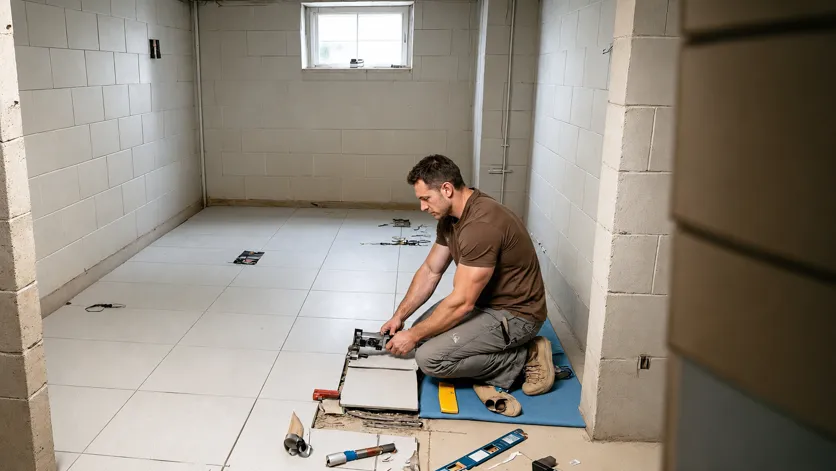
Repair-or-Replace Guide
| Finding | What it may indicate | Sensible next step |
|---|---|---|
| Minor spill cleaned promptly, with no movement or elevated readings | Limited surface exposure | Document and monitor |
| Mild cupping after a clean-water leak | Moisture imbalance | Continue controlled drying and reassess |
| Finish whitening, staining, or loss of adhesion | Finish or surface damage | Test a small area after drying |
| Elevated moisture beneath the boards | Wet underlay, adhesive, or subfloor | Investigate below and continue drying |
| Loose or lifted boards | Fastener, adhesive, or dimensional failure | Open the affected area and inspect |
| Separation within engineered boards | Delamination | Replace affected boards |
| Soft wood or weakened plywood | Material deterioration | Remove and rebuild as required |
| Sewage or outdoor floodwater exposure | Contamination | Complete professional remediation first |
This table is a starting point, not a diagnosis. The extent of the damage may become clear only after trim or selected boards are removed.
What a Useful Quote Should Include
A clear quote lets you compare the actual work rather than comparing totals alone. It should identify:
- The rooms and approximate area involved
- The known water source and whether it has been corrected
- Who is responsible for extraction, drying, and moisture documentation
- Materials to be removed, retained, and replaced
- Planned work to the subfloor, underlay, or adhesive
- Replacement flooring by product, species, grade, and dimensions
- Repair boundaries, board direction, and transitions
- Sanding, stain, coating system, and intended sheen
- Furniture, appliance, trim, and disposal responsibilities
- Schedule, cure time, and access restrictions
- Labour, materials, tax, allowances, and possible additional charges
- Exclusions such as plumbing, mould remediation, drywall, or painting
- The process for documenting and approving concealed damage
- How issues after the repair are handled
“Replace damaged boards” is not a complete scope. Ask how the repair area will be defined, how matching material will be sourced, and whether adjacent flooring must be refinished to produce a reasonable visual match.
Cost and Insurance
There is no responsible flat price for water-damaged hardwood. Replacing a few accessible boards is very different from repairing damage that extends through several rooms and into the subfloor.
Pricing depends on the affected area, flooring construction, installation method, contamination, subfloor condition, availability of matching boards, refinishing boundaries, trim, furniture handling, and disposal.
Compare written quotes line by line and confirm whether emergency drying, demolition, subfloor work, new flooring, refinishing, trim, and tax are included.
For an insurance claim, keep:
- Photographs and video
- The plumber’s findings and invoice
- Drying logs and moisture records
- Flooring labels or purchase records
- Estimates and approved change orders
- Final invoices
- Written communication with the insurer
Ask whether the insurer wants to inspect damaged material before it is discarded, unless retaining it would create a safety or contamination problem. A contractor can document the damage and recommend a repair, but only the insurer can determine coverage under the policy.
Common Questions
How long does hardwood take to dry?
There is no standard number of days. The time depends on the floor, amount of water, subfloor, finish, temperature, humidity, and drying method. Repeat readings are more useful than elapsed time alone.
Can black stains be sanded out?
Some shallow stains improve with sanding. Others penetrate deeply or have a cause that sanding cannot correct. Identify the likely cause and test a small area after the floor has dried.
Does buckling mean the entire floor must be replaced?
Not necessarily. Localized damage may be repairable. The boards, attachment system, expansion space, and subfloor should be inspected before the repair boundary is defined.
Can engineered hardwood be refinished after water damage?
Possibly. It depends on the wear-layer thickness and whether the core and internal bonds remain intact. Delaminated boards generally need replacement.
Make the Decision After Drying
The first question after water damage is not which stain to choose or how soon sanding can begin. It is whether the flooring assembly is clean, dry, stable, and suitable for repair.
A sound assessment should explain where moisture was found, how it was measured, how the readings changed, and what was discovered below the visible surface. Only then can a contractor make a defensible recommendation to leave the floor alone, repair it, refinish it, or replace it.
For an assessment after the emergency mitigation stage, contact Mississauga Carpet & Flooring.